
Fifteen years ago, in 2010, Gretchen Hyde, Executive Director of the Idaho Rangeland Resources Commission, was ready to make a change.
She’d been trying to spread educational messages about Idaho’s rangelands via TV, print and radio ads.
“We did 30-second TV spots, so super hard to get the right message out, because it’s really complicated. There’s no simple, all ranchers do this, or all ranchers do that. The rest of the story is what’s interesting to me. The passion people had for the land, the place, the history, the livestock, the plants, you just couldn’t tell that story in 30 seconds.”
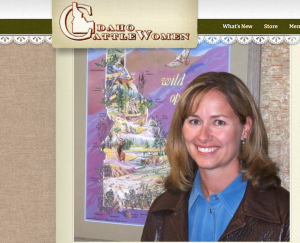
Gretchen Hyde
Gretchen approached Steve Stuebner, a Public Relations pro and former journalist with a strong background in outdoor and natural resource issues, to see if he’d be interested in telling stories about rangelands and ranching.
Stuebner had just gotten laid off from a PR job in Boise. He was intrigued.
“It was really good timing for Gretchen to approach me then, for several reasons, No. 1, the New Media thing was happening,” Stuebner said. “You Tube was really taking off in the 2000s. When I was at Drake Cooper agency, my boss was like, you get a YouTube channel, you sign up for Facebook and twitter, you use them and get to know them, blah blah blah.”
“So by 2010, I had a really strong skillset on the PR side of things, but also on the use of new media. Basically, what that does, it gives you a chance to tell your own story, unfiltered.”
“That’s kind of a game-changer for just about anybody.”
That’s exactly what Gretchen Hyde wanted to do – create her own media platform for the Rangeland Commission so ranchers, agency professionals and others could tell their stories about Idaho Rangelands.
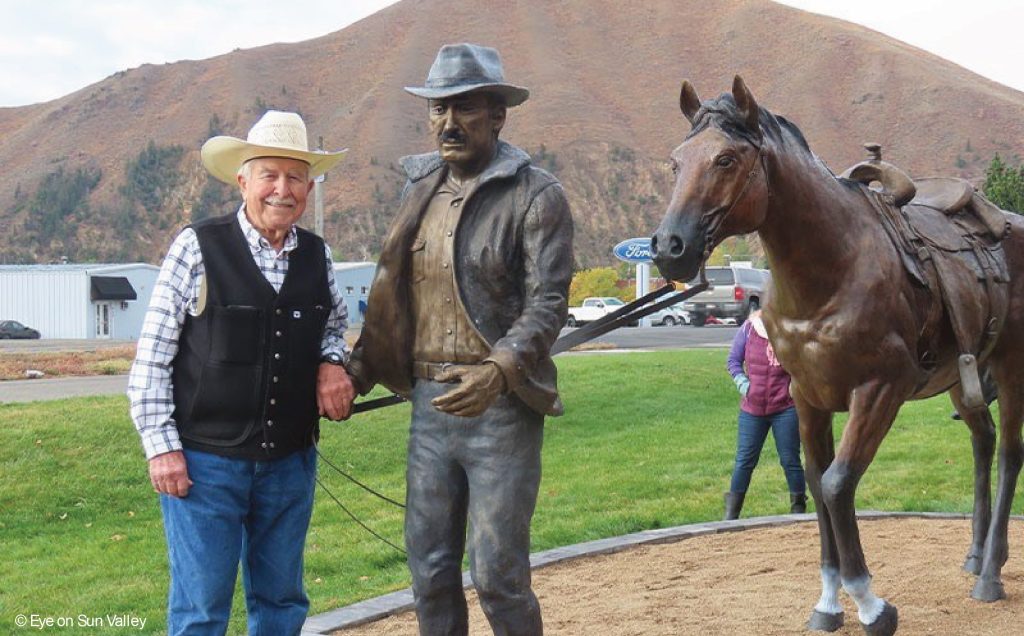
The late John Peavey in Hailey, Idaho (courtesy Eye on Sun Valley)
Just listen to the late John Peavey, owner of the Flat Top Ranch in Central Idaho.
“Ranching is a wonderful way to spend your life,” Peavey said in a Life on the Range video. “You’re out here, it’s spectacular. People travel from all over the world to come here and spend a week at Sun Valley. And I get to spend my lifetime up here. It’s the interaction between the plants and the animals, the cows, the dogs, the sheep, even the horses have different personalities. It’s a lot of fun and very, very rewarding.”

Steve Stuebner
A key objective for the Idaho Rangeland Resources Commission was – and still is – to reach urban outdoor enthusiasts with its educational messages.
So the notion of hiring Stuebner to tell their stories seemed like a good fit – he had a strong following from selling Idaho outdoor books and writing weekly tips in an outdoor blog.
Hyde and Stuebner created a newly branded educational web site called “Life on the Range.”
Their vision and mission for the Life on the Range series remains true to this day: “To showcase real stories about the ever-changing landscape of ranching, multiple-use management, entrepreneurial spirit, family and stewardship on Idaho’s Rangelands.”
Each story would be told in video and print. The Rangeland Commission Board of Directors and partners provided great counsel along the way.
 Over the last 15 years, more than 85 stories have been published on the Life on the Range website and YouTube channel. People seem to like it.
Today, the Life on the Range video channel has more than 6,800 followers, and 8,200 followers on Facebook. Life on the Range also is on Instagram.
The most popular Life on the Range story so far is about Wilder sheep rancher Frank Shirts, raising sheep from A-Z, with more than 960,000 views.
Back in 2010, Hyde was hearing concerns about hiring Stuebner to craft the stories.
“I had a lot of one-on-one conversations, what are you thinking!” Hyde said. “Steve Stuebner had a reputation, let’s just say that. Steve was an environmental reporter for The Idaho Statesman and High Country News and had a reputation for in-depth reporting. But you had a passion for place, I’d done research on your recreation, and you were exactly who we needed to be talking to, and building relationships with and understanding these wider perspectives.”
“Steve was one of those green environmentalists that I was scared to death of, I’ll be right honest with you,” said Royce Schwenkfelder, an IRRC board member in 2010. “So Gretchen calls me and says, I think I found the guy, Steve Stuebner, and I said, “Oh, you strike fear in my heart.” But it wasn’t because of a bad experience, but I was like, are you sure? But like Gretchen pointed out (skip to: ), Steve was exactly who we needed to be talking to and telling our story.”
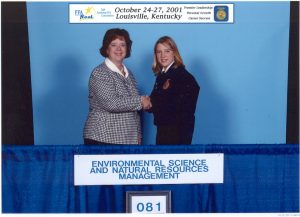
Kayla Schwenkfelder receiving a national FFA award for creating a fish and wildlife pond on their ranch.
The first story out of the chute was about Schwenkfelder’s daughter, Kayla, who created a wildlife pond on the SS Cattle Ranch as part of a FFA project.
“It’s kind of one of those fun things when you have the opportunity to live on this beautiful ranch. You can have 5 acres you can do anything you want with … and a family that will give up 5 acres to make your dream come true,” Kayla said in the video about her project.
“If you build it, they will come, and it’s amazing – you see geese out here, swans, ducks, mallards, buffleheads, just a variety of wildlife and it’s great.”
“She got a national award for it and she got some scholarships that came out of that, so being in FFA isn’t just about having cows for her, it was about doing other stuff, finding more of a balance on the ranch with wildlife and cattle, so that started the ball rolling, and we try to continue that,” said Royce Schwenkfelder.
Also in that first year, the Life on the Range video crew visited Chris Black’s ranch in Owyhee County and did a story about holistic management. Black had recently been honored nationally as the BLM Steward of the Year.
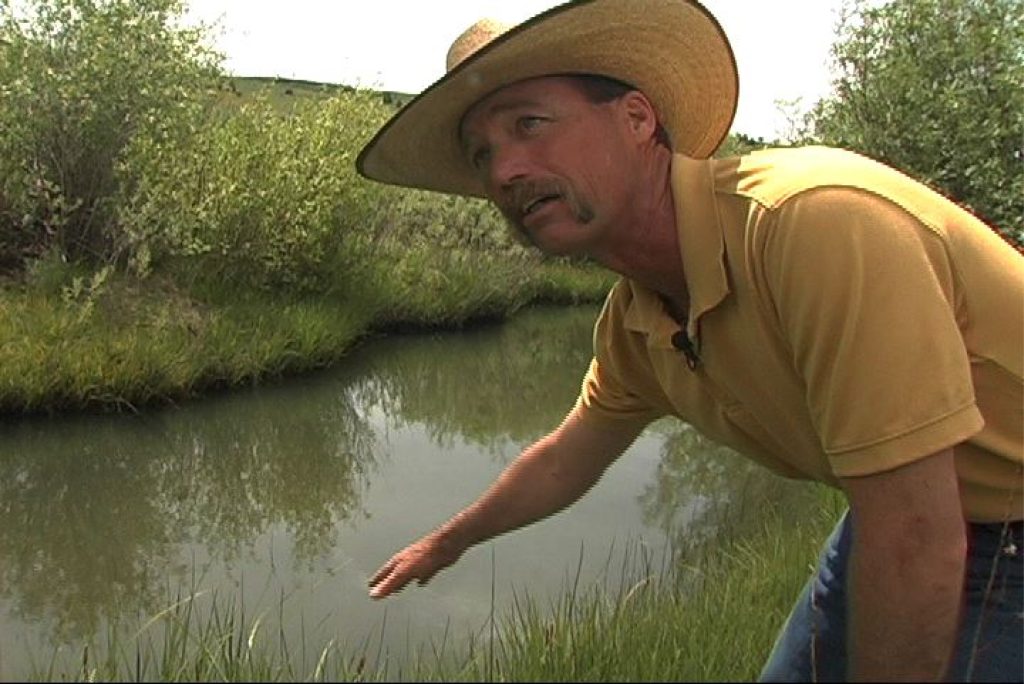
Rancher Chris Black explaining a thriving riparian area on Pole Creek.
“We went out on Pole Creek, and you showed us what you’ve been doing there. Really challenging management over the years, you were changing things up, and your dad gave you the freedom to do that. You were leaving your mark, you explained what you were doing out there, and it was phenomenal,” Stuebner said.
“When that first started, you weren’t that impressed initially, but as we got into things and looking at the things happening out there, you got excited about it,” Black said. “So that’s what made any story, it wasn’t me particularly, backgrounds are beautiful everywhere in Idaho, it was you being able to garner the story out of me.”
Stuebner liked to showcase conservation success projects on rangelands.

Rancher Jay Wilde describes the beaver ponds on Birch Creek in the background. It’s one of many conservation stories covered by Life on the Range.
“What we actually carved out is the idea of telling success stories, a lot of success stories, and a lot of them related to conservation, not all, but to me those stories were going to resonate with the urban audience, our target audience, who uses the outdoors and our rangelands all over Idaho,” Stuebner said.
“Through the genius of video and new media, you’re not just telling people. Let’s go see it. Let’s film it. Let’s have people talk about the project – it’s an authentic, real project that’s going to improve things out there on the range.”
“Well the operative word is you made it our story,” Black said. “And you made it your story too.”
Added Schwenkfelder, “Steve has the ability to find the story, find the positives, and find ways to tell our story in better ways than we know how. And I appreciate that.”
“You said you want to make these guys heroes, and that’s what you did,” Black said. “And that’s what boosted people to looking at the conservation, which pulls to the heart of all ranchers, and seeing it through their eyes, in my opinion.”
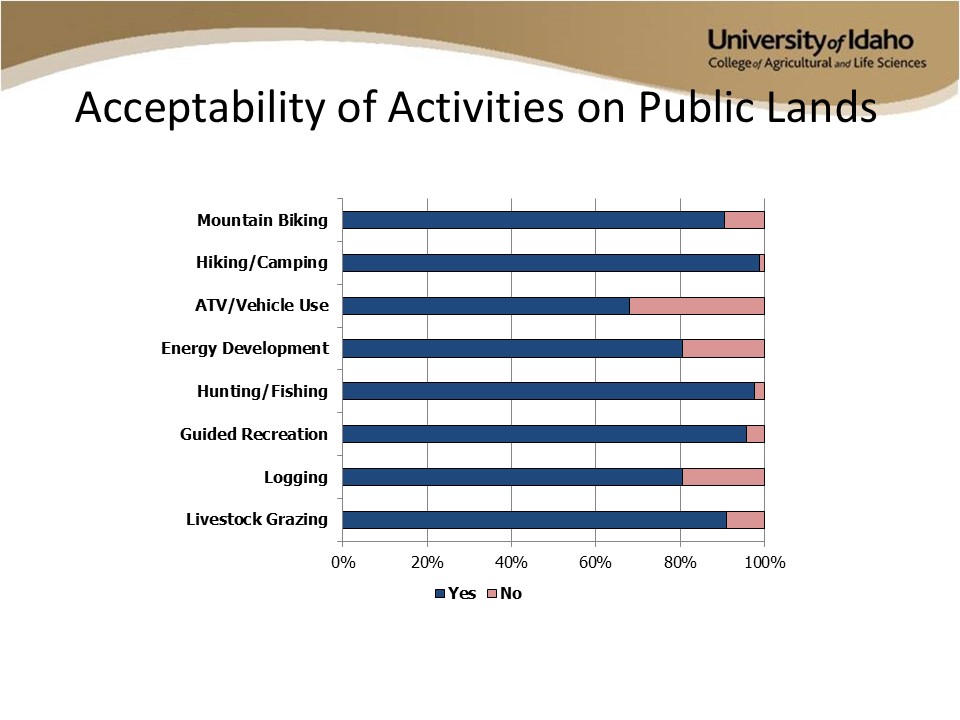 IRRC public opinion polls, done every 5 years, showed that the Life on the Range video series improved public engagement and understanding.
After new Life on the Range stories were published online, Stuebner shared them with the Idaho mainstream media to expand the audience.
“One of the pioneering things we did right out of the chute, was the idea, we not only tell our story on YouTube and our web site, but we share these stories with the media,” he said. “And so you dish them a success story, and that becomes news. And that wasn’t news before.”
Life on the Range story also published in the Idaho Farm Bureau magazine.
The videos also are used by teachers and professionals as an educational resource.
“I’ve always made it a practice every year to use at least one Life on the Range video that’s applicable to the topic we’re covering in the field day, and so those educational materials and videos are extremely valuable,” said Scott Jensen, a University of Idaho Extension Range Educator.
The Life on the Range crew did educational videos on student field trips, spotlighting the use of IRRC educational materials helping students learn in the field. The 15-year Retrospective video quotes an Emmett teacher leading a field trip to Sage Hen Reservoir in the Boise National Forest.
In a IRRC plant handbook, students learned about cellular structure and photosynthesis in the classroom and then they learned about the plants growing in nature by Sage Hen Reservoir.
“The students can use their knowledge to learn about different parts of the plant and how they’ll use that to grow. Seeing the plants growing in a natural setting gives them a chance to learn hands-on what we’re learning in the classroom,” said Shelly Gurney, a 5th grade teacher in Emmett.
“To be able to tell these stories, have videos to show that are relevant to where they live, and understanding more about plants,” Hyde said. “There’s a lot of information in these videos, teachers use them often, That’s been a huge driving force in Life on the Range is making things relevant to students as well.”
Life on the Range tackled challenging topics like big wildfires, such as the Elk and Pony wildfires on BLM and Boise National Forest land in 2013.
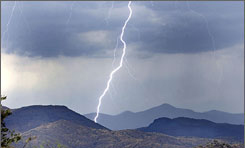 “On a hot, dark night in August, a multitude of lightning bolts struck the foothills and mountains north of Mountain Home,” Stuebner wrote in the wildfire documentary, against the eerie backdrop of lightning strikes hitting the land. “Grass, shrubs and timber were tinder dry from no rain and below-normal snowpack. So the fires took off.”
Prairie rancher Randy Davison was listening to the fire channels on the radio from the Danskin Lookout, “and they were reporting new fire starts everywhere. And we went, oh my god. It went crazy from there.”
“I never pictured the whole ranch going up at once,” added rancher Charlie Lyons.
The award-winning story on the 280,000-acre wildfire made a lasting impact, Black said.
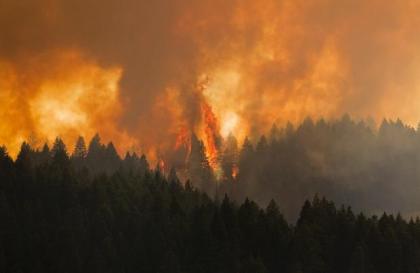
Elk and Pony complex wildfire burned 280,000 acres.
“When we had the Elk and Pony fires, to tell something that was emotional, that was in the news right then, the repercussion to that, the Rangeland Fire Protection Associations (RFPAs), that really boosted them, having Charlie in there, and tearing up,” he said. “You took the opportunity to do that, and brought the story-telling to that, and it benefitted our community in numerous ways.”
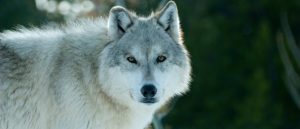
In one of the most challenging projects, the Life on the Range crew tackled the wolf issue with a 5-part series.
Stuebner and Hyde worked closely with the IRRC Board of Directors to carve out the scope of the series, taking a historical and chronological approach.
“That was a huge undertaking – I’ve put that web link in front of a lot of people. That need still exists to tell that story,” Schwenkfelder said.
The 5-part series has been a big hit, with hundreds of thousands of views on YouTube.
The series provided an educational understanding about how wolf populations expanded from the time they were reintroduced to Central Idaho in 1995 to present day.
 “I think the key thing is you were telling a story,” Black said. “Us ranchers, we tell stories to learn. Our stories are our history. You told the complete story. That’s what made it successful.”
The Life on the Range crew also produced legacy stories about Idaho ranchers who are considered icons or legends in the industry. It’s been gratifying for Hyde, Stuebner and the IRRC Board of Directors to see those videos played at the memorial services for the late Bud Purdy, Phil Soulen, and John Peavey.
“That’s Idaho, those are the people who built Idaho, and that’s Idaho,” Black said. “It’s been a great ride.”
“You were the perfect thing, the perfect partnership,” Schwenkfelder said.
“It’s been an incredible privilege for me; that’s how I feel about it,” Stuebner said.

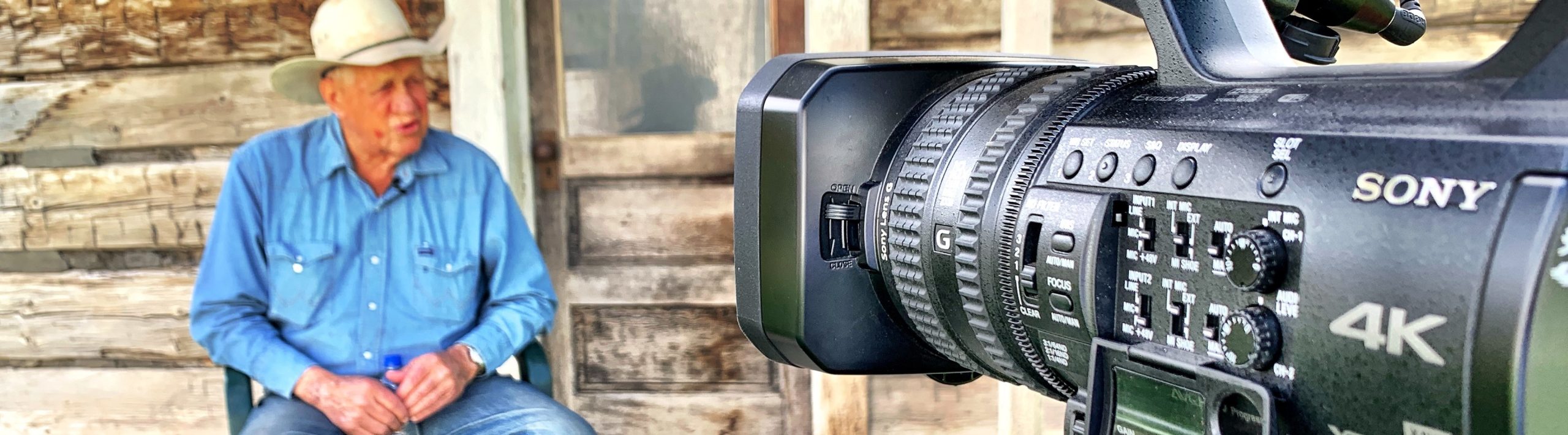
Dual camera set up for interview with, L-R, Royce Schwenkfelder, Steve Stuebner, Gretchen Hyde and Chris Black to reflect on 15 years of Life on the Range stories at the SS Cattle Ranch in Cambridge.
Stuebner is eyeing retirement from Life on the Range in the next couple of years. In the meantime, he looks forward to telling more stories about Idaho’s Rangelands and ranching heritage, staying true to the Life on the Range theme.
“Steve has been a joy to work with,” Hyde said. “Your enthusiasm, your work ethic, tenacity to get a story done, and done fast, you are so productive, it’s just incredible. You’ve got a great team, is what I’m saying. I don’t think I can tell you how much I appreciate it.”
Who is the team? Stuebner produces the documentary films in the field with professional videographer Chris Ennis of NuVision Productions. Ennis shoots the landscape footage and interviews, he flies a drone for aerial footage, and he edits the stories, following Stuebner’s script. Barb Thometz, a professional voice talent, narrates the stories. Once a new story is ready for prime time, Stuebner loads up the video, feature story, photos and web links on the Life on the Range web site.
Given the growth occurring in Idaho, the need to educate newcomers about Idaho Rangeland issues is just as important as ever, Schwenkfelder said.
“Today, we have a lot of new people moving to Idaho, but we have a lot of work to do,” he said. “Our work is never done. It is probably more important than it has ever been right now.”