
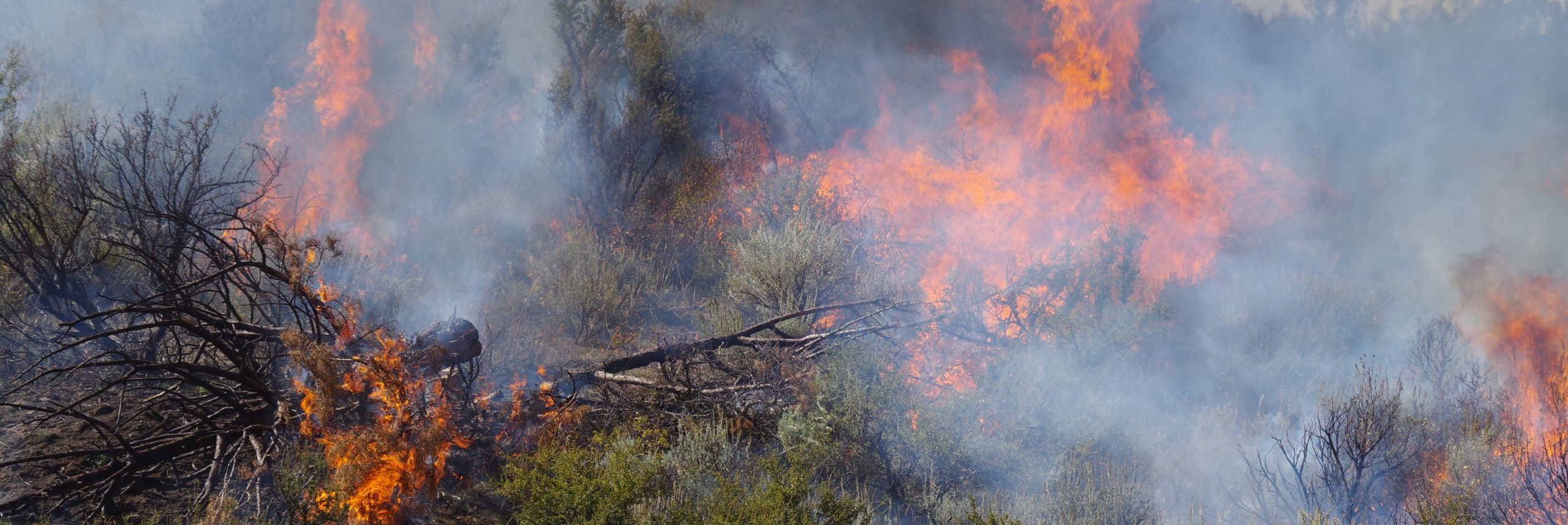
Research Professionals have been planning a prescribed burn in the Upper Reynolds Creek area in Owhyhee County, Idaho, with local ranchers for more than 20 years.
The USDA Agricultural Research Service has been tracking hydrology and rangeland trends in the Reynolds Creek Experimental Watershed since 1960.
Local ranchers own the majority of the land in Johnston Draw, the location of the burn project.
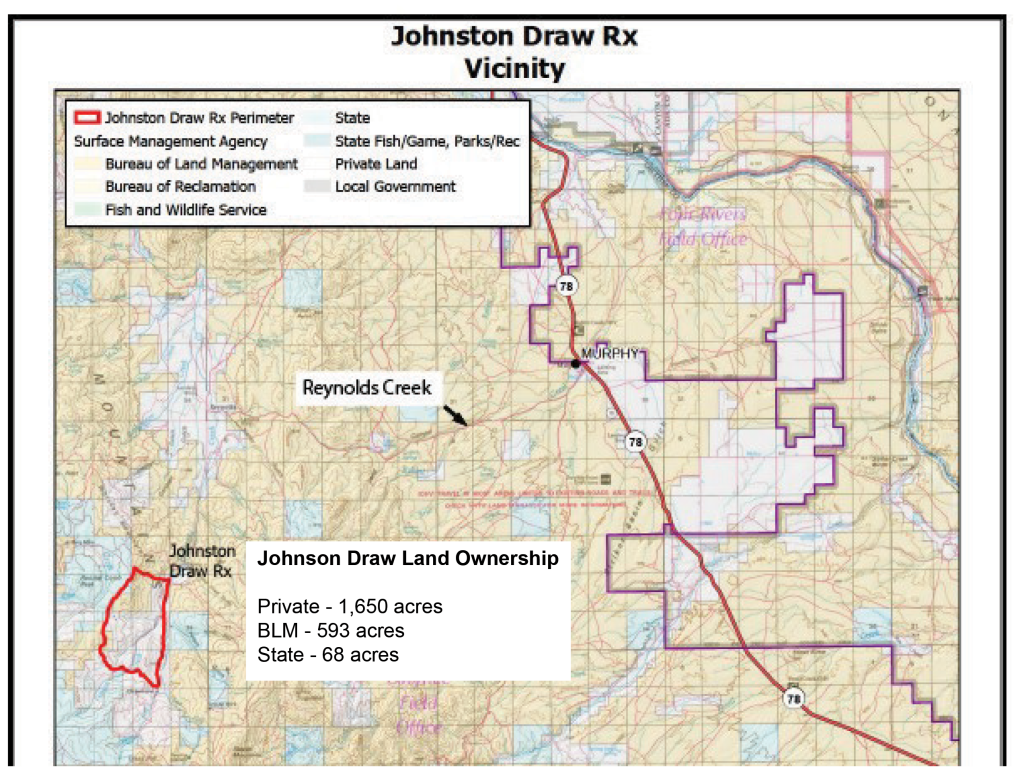 ARS partnered with the Bureau of Land Management, which had the manpower, equipment and expertise to plan and implement the 2,300-acre prescribed burn.
In early October, the BLM had perfect weather conditions for implementing a successful burn project in Johnston Draw.
A key objective was to jump-start the renewal of aging and decadent vegetation with a moderate prescribed burn. They also wanted to learn how the cutting and burning of juniper trees in Johnston Draw would affect streamflow in Reynolds Creek.
All told, more than 10 research studies are under way to learn how the prescribed fire influences native plants, wildlife habitat, soils, water quality and more.

BLM crews ignite a “black line” around the perimeter of the prescribed burn area on Day 1. (photo by Steve Stuebner)
On Day 1, following several days of cool, wet weather, BLM crews ignited a “black line” around the perimeter of the burn area.
BLM Burn Boss Lance Okeson explained the strategy to the team of firefighters who would be igniting the fire.
“We’re going to start our test fire here, and go like this, and then we’ll keep coming around like this,” Okeson said, referring to a map of the Johnston Draw area.
“We’re in our (weather) window, we got our resources here, everything is a go.”
Okeson cautioned the crews to pay close attention when igniting vegetation, even though it had rained earlier in the week.
“Don’t let the last little wet thing fool you, the fuels are heavy and it’s steep country in there,” he told BLM fire crews. “It’s real complex terrain, and the fuels will be as heavy as you’re going to see in the sagebrush steppe.”
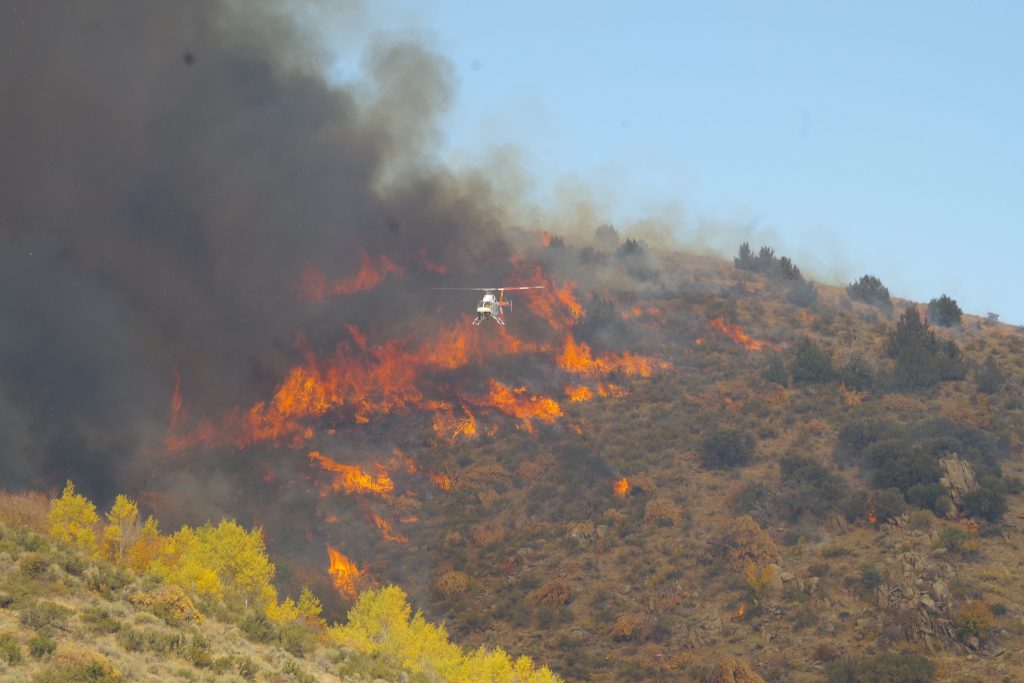
Ignitable ping pong balls dropped from a helicopter start flames in the upper part of the canyon on Day 2. (photo by Steve Stuebner)
The BLM had more than 60 firefighters on hand, plus 9 fire engines, 2 dozers and a Type II helicopter for igniting and managing the fire.
Working to establish the black line around the edges of the prescribed burn, the vegetation caught fire but burned slowly on Day 1.
That made things very manageable for fire crews around the perimeter of the burn zone.
On Day 2, fire crews worked on burning the inside of the fire perimeter. The BLM started fires by dropping ignitable ping pong balls from a helicopter in the top of Johnston Draw, and ground crews ignited vegetation at the bottom of the canyon.
The plan was to have the fires burn together, and that’s exactly what occurred.
Time-lapse video from the Agricultural Research Service shows the prescribed burn in Johnston Draw from afar.
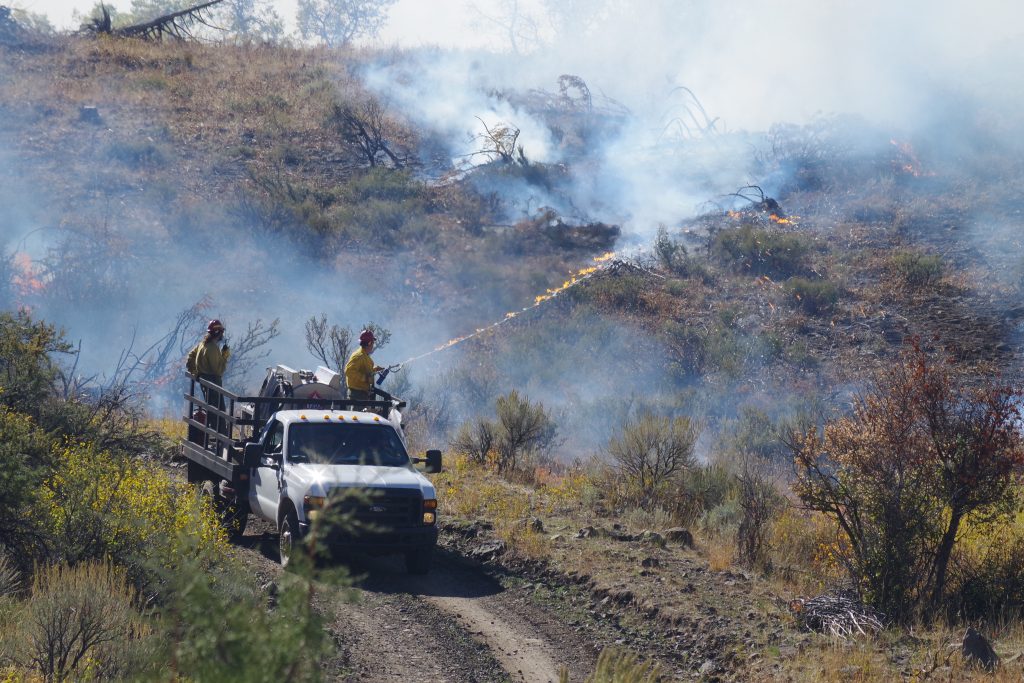
BLM crews use propane torch to ignite the prescribed fire from the bottom of the canyon on Day 2. (photo by Steve Stuebner)
Conditions were drier on Day 2, and the vegetation burned more readily.
“Things are burning pretty good,” Okeson said, during a brief break while the helicopter refueled. “It’s going really well. Yep. We’re right on target.”
Juniper cutting projects added fuel to the landscape. The brownish-blond dead juniper needles can be seen amid the sagebrush as the helicopter flies overhead.
The BLM finished up the burn after 3 days. A rainstorm snuffed out hot spots the following week.
Follow up satellite imagery shows that about 80 percent of the area burned.
Private landowners are anxious to see how vegetation bounces back after the prescribed burn.

Juniper trees cut on private land previously were burned as part of the project, adding to the fuel for the fire. Numerous aspen stands in the upper canyon provide habitat for birds and wildlife. (photo by Steve Stuebner)
Jerry Hoagland, a Reynolds Creek rancher and Owyhee County Commissioner, was pleased to see the prescribed burn project proceed.
“I’ve been looking forward to this for years,” Hoagland said. “The benefits are in the plant community, going from late seral stage back to zero and start fresh again.”
“I think it’s a great deal,” added Martin Jaca, whose family also owns land in Johnston Draw and the upper Reynolds Creek area. “In 2015, when we saw the Soda fire, we were kind of shocked and awed, didn’t know what to think about fire, but afterward, the effects of the fire have proven to rejuvenate the rangeland.
“Everywhere we go, the grass, the feed, the shrubs are coming back healthier, I believe. Old stuff out of the way, and new life to the range.”
ARS officials say it will be at least a year before we see the results of research studies related to the prescribed burn project.
Twenty-three researchers are involved from ARS, Boise State University, Idaho State University, Oregon State, the University of Cambridge and the University of Texas-El Paso.
Life on the Range will do a follow-up story when the results are ready.
© 2024