

On a breezy morning in May, Bureau of Land Management Range Specialist Katie Shewmaker heads out on the Idaho Range with Rancher Jessie Jarvis to check on a grazing pasture.
They’re greeted by a curious Angus mother cow, fitted with a GPS collar, and her calf.
“I think the best part of my job is just that it’s so dynamic, there is never the same thing to do on any day, and I get to work in the intersection of science and rangeland health, and working with so many different people, and that is very fulfilling,” says Katie Shewmaker, Range Management Specialist for the Bureau of Land Management.
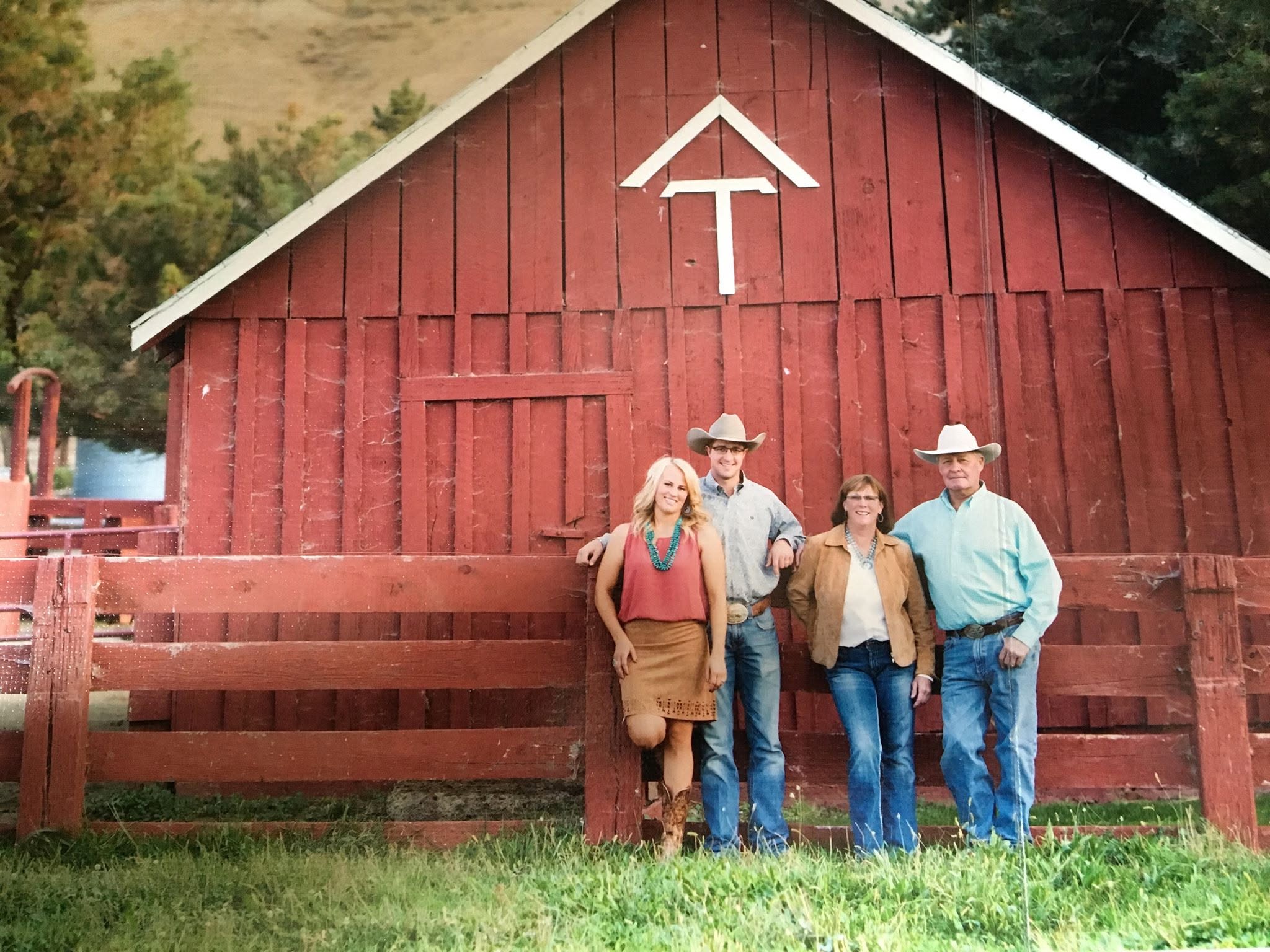
Jessie Jarvis, left, with her husband, Justin, and her parents, Kim and Allen Thompson, at the Rafter T Ranch near King Hill. They all work together on ranch operations.
Following the Twenty-Mile Fire and the Basin Fire in 2024, Shewmaker and Jessie’s family worked together to create a post-fire grazing plan for the family’s BLM grazing allotment. Jessie’s parents, Allen and Kim Thompson, own the allotment, located near King Hill, Idaho. Jessie and her husband, Justin, support her family’s cattle operation.
Virtual Fencing technology allows the rancher and BLM to set up invisible boundaries that prevent cattle from grazing areas damaged by wildfire, while leaving healthy rangelands open for grazing.
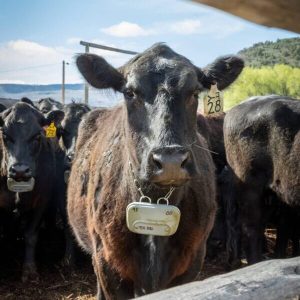 The cattle wear GPS collars. When they approach a virtual fenceline, the animal’s collar beeps—a sign they’ve gone in the wrong direction and should turn around. If they keep going, they get a shock. With 4 days of training, the cows learn quickly.
Jarvis is grateful to the BLM for supporting their ranch’s adoption of Virtual Fencing technology. For example, the BLM provided the base station to make the project work.
“The base station for this specific one runs approximately $12,000 and so for BLM to allow us to utilize it, so that we didn’t have to make that investment, is, I mean, that was a big deal for us,” Jarvis says.
“We’ve been really pleasantly surprised with how successful it has been. We were a little skeptical to begin with, but we can say no bad things about it.”
Jessie Jarvis is one of many ranchers in the West who are embracing Virtual Fencing technology as part of innovative federal range management.
“Yeah, I think I think ranchers like Jessie are helping to define what modern ranching looks like. I think it’s incredibly exciting that she’s been so open to embracing new ways to help really bolster the health of our rangelands,” said Kristin Troy, who serves on the National Leadership Council for the Foundation for America’s Public Lands.
 The Foundation for America’s Public Lands is the charitable partner of the Bureau of Land Management. The Foundation helps provide impactful on-the-ground resources for ranchers, local communities, and public lands in Idaho and across the West. One example is virtual fencing.
With Foundation support, this technology is being deployed across 400,000 acres of BLM rangelands, helping ranchers manage their herds more efficiently, improving rangeland health, and keeping working public lands healthy for the long term.
“It’s not surprising, ranchers are and have been the people for so long who have been out on the ground through every season, they understand the rhythms of what is happening out on the ground, so they really are the perfect partners to be utilizing a technology like this, because they can combine their on-the-ground knowledge with these new technologies,” Troy says. “They’re creating the perfect bridge.”
Grazing is allowed on over 150 million acres of public land in this country – 60% percent on BLM lands.
Jarvis is a rising star in Idaho and the West. She’s an advocate for range stewardship, family – she’s the mother of two young children – Agriculture, fashion, job-seekers and more. She spreads the word through her weekly podcast, Leaders of the West, which has 150 episodes and counting.
 Her job site is called “Of the West” with 40-50 new listings per month.
Jarvis also is popular in the social media with more 57,000 followers and counting on Instagram and thousands more on Facebook.
The Idaho Farm Bureau gave Jarvis an “Influencer of Ag” award in 2025. She was recently featured in “People” magazine, asked to comment on the “Dutton Ranch” TV series.
“Yeah, Jesse Jarvis is such a bright shining light in so many ways, as far as being an influencer in the western industry, you know, promoting the western lifestyle and expertise in agriculture, and then also really from my perspective working for the BLM, she’s such an amazing voice for that partnership between working with the federal government and a public lands rancher,” says Heather Tiel-Nelson, Public Affairs Officer for the BLM Twin Falls District.

Of the West job platform has new listings daily …
“If somebody were to ask me what my superpower is, I always say, connecting people. I love to connect people with people,” Jarvis says.
On her podcast, she interviews many business leaders listed on “Of the West.”
Jarvis is trying to reach people who live and work in agriculture, and she’s also trying to make the agricultural industry more accessible to others.
“So when it comes to my audience, I feel I have the perfect blend of both. I have people who have grown up in agriculture, and are passionate about the industry. Then I also have a group of people who are curious about our industry, and I again get to play that opportunity of connecting those two audiences together.”
Background on Jessie
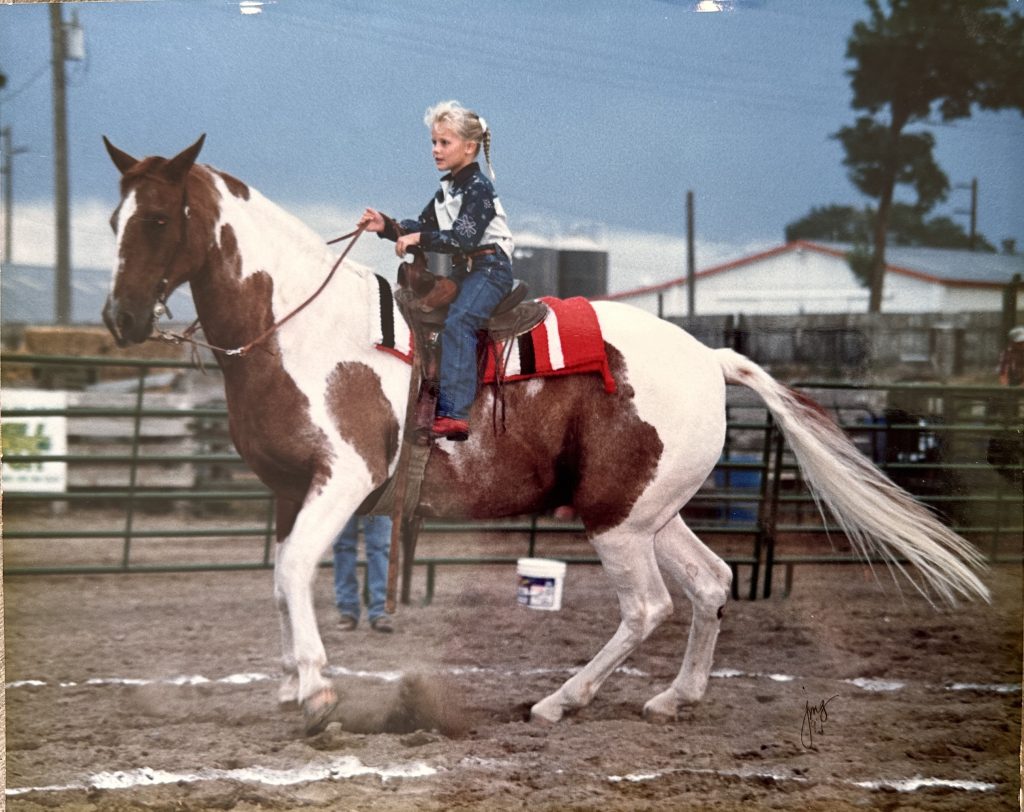 Jarvis grew up on her family ranch in King Hill, Idaho, raised by her parents, Allen and Kim Thompson.
She went to the College of Idaho and got a degree in business management.
She worked in communications at the Idaho Cattle Association for three years, and then seized on an opportunity to return to the family ranch in King Hill. “If they’re going to hire somebody, they might as well hire me,” she said.
Soon after, she married Justin Jarvis, a 5th generation rancher from Elmore County. Jessie and Justin have been building up their own cattle business, Jarvis Livestock, while helping Jessie’s parents with their cow-calf operation.
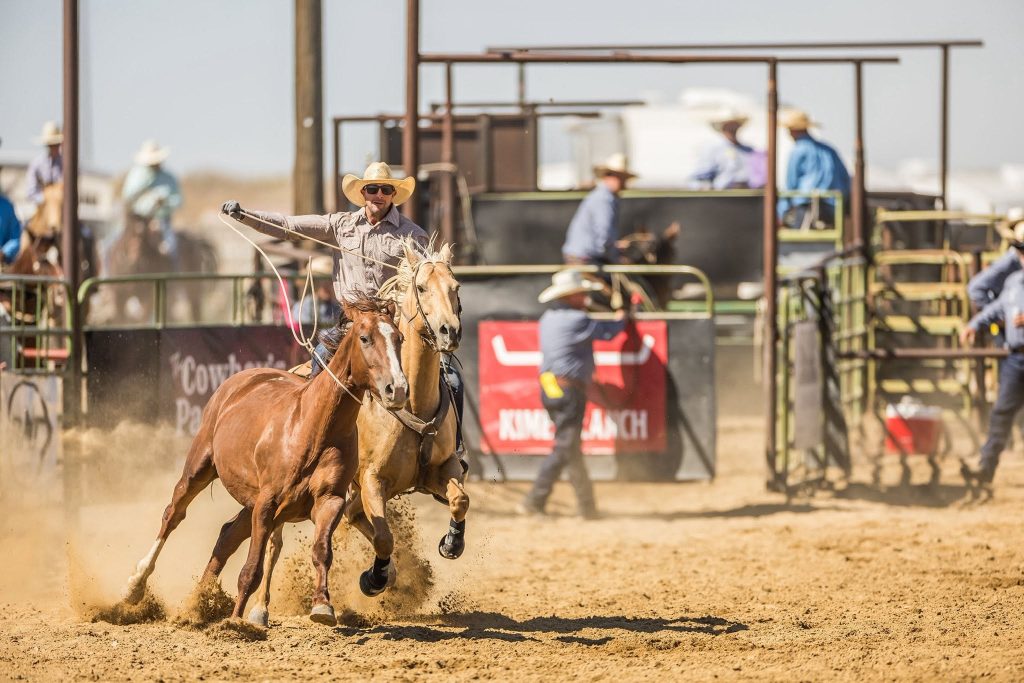
Jessie’s husband, Justin, is the real-deal, a 5th generation rancher.
In her “free” time, Jessie worked remotely for Boutique Hub, a national company that supports independent retailers, for seven years.
“That really immersed me in the world of online business, digital platforms, community building.”
“So from my time there, coupled with my passion for agriculture, I really saw a need for our industry when it came to finding jobs and finding great employees, and so at that point I took the leap and created “Of the West.” We launched in 2021 and we’re still here.”
Jarvis started her top-rated weekly podcast, Leaders of the West, in 2023.
“A podcast is like a plant – you’ve got to water it single week, right?”
“It gives us a really great opportunity to highlight the movers and shakers within our industry,” she says. “There’s some really powerful, exciting, cool innovative people in agriculture. I want to connect people with those types of people.”
 As for fashion, Jarvis says she was a Tom Boy as a child. But nowadays, she’s proud to dress like a rancher. She models many of her western outfits on Instagram.
“I want you to know that I am a cowgirl, and I want you to know that I am representing the backbone of agriculture and farmers and ranchers across the state.”
Jarvis has a lot to juggle in her busy life. That can be stressful, but Jarvis frequently goes out on the BLM Range with her husband, Justin, to move cattle, where the wind and the sky and nature can take over.
At times like this, Jarvis is grateful to be a rancher.
“I think of how lucky we are to be tied so close to the land, to work outside every day, to be able to work alongside animals in stewarding cattle and also getting to use horses in that process and work with cow dogs, I mean, there is no job like that of being a rancher, because you get to bring all of those worlds together.”
The BLM, meanwhile, ensures the Jarvis’ federal grazing allotment is being managed properly with range monitoring.
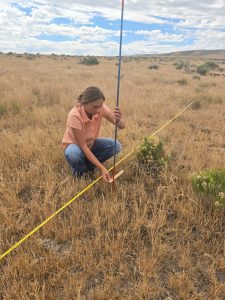
Range monitoring (courtesy BLM)
“Monitoring is the backbone of a good healthy range land resource program,” Shewmaker says. “So as you can see, there’s a lot of forage availability out here. The utilization in this northern end of our allotments has been less than 10%.”
Shewmaker likes how the Virtual Fencing project is working out with Jarvis Livestock.
“This has been an absolute exceptional experience, I think, and a lot of this that I think this plan has worked together so well is because of the coordination between the partners, the BLM, and the permittees work really well together.”
“Not only did it keep us on the land, but it kept those cows in our herd. It allowed us to continue to make really good financial management decisions. So it’s been a win all around.” (stop at 3:14)
Having a plan for land stewardship is a key responsibility for all ranchers to benefit the BLM range and show respect for other multiple uses of our public lands. Jessie, meanwhile, is putting her own personal stamp on what it means to be an Idaho cowgirl, a 21st century Idaho rancher, while helping others tell their story and grow the agricultural industry.
She’s still in her 30s, so she’s really only getting started!
Steve Stuebner is the Writer and Producer of Life on the Range, a public education project sponsored by the Idaho Rangeland Resources Commission.
© 2026