

Every Idaho farmer expects to have a few big game animals feeding in their pastures from time to time.
But to have 1,000 elk spending the winter on your farm is a bit extreme!
That’s what happened to three landowners who farm just north of Interstate 84 in Bliss during the winter of 2024-2025. “We need to get to a manageable number of animals,” said Chad Helmick, a rancher in Bliss with Helmick Cattle Co., LLC.
Adds neighboring rancher Katie Dennis, “The elk are really nice to look at. We used to have 30 head of bulls walk through, that was kind of cool, then we had 400-500 elk walk through, eating along the way. Now we’re feeding hay.”
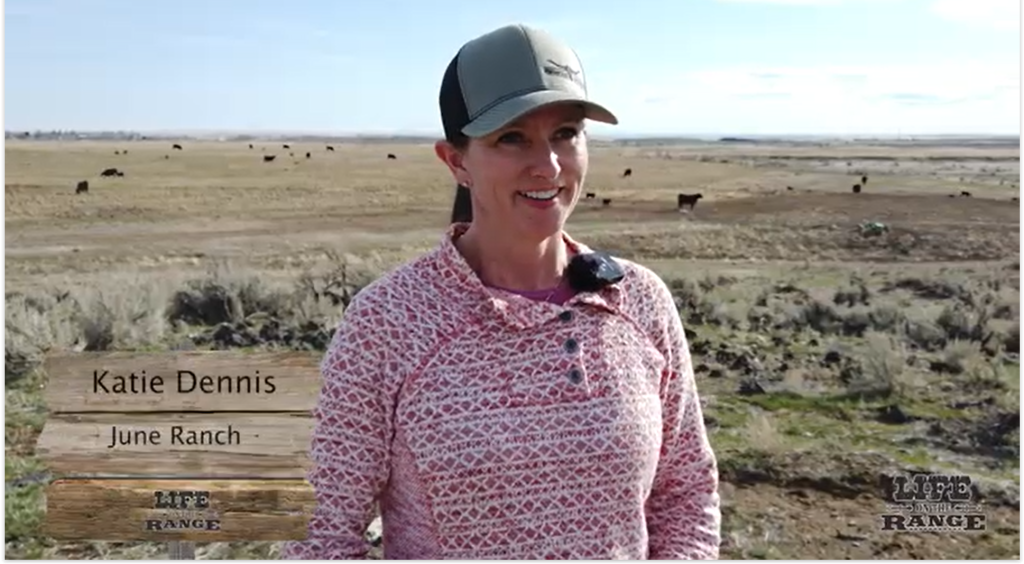 Dennis runs a cow-calf operation with her husband, John. They prefer not to feed hay to their cattle herd in the winter, but the elk were eating their wheat stubble.
There’s a strip of sagebrush habitat on BLM land next to the freeway. The elk cruise back and forth between public and private land.
“They’re kind of hard on fences, following the cows around, it’s massive number of animals,” Dennis says. “They just go where they want to.”
Officials with the Idaho Department of Fish and Game (IDFG) are perplexed as to why there’s so many elk in the farmers’ fields.
“This is a phenomenon really started 4-5 years ago,” said Mike McDonald, IDFG Regional Wildlife Manager in Jerome. “We started to see large groups of elk taking up residence in the lower reaches of the Bennett Front. And this year, for whatever reason, it kind of hit its climax.”
“They arrived around Christmas, and they arrived in big numbers, 1,000 elk in one herd. Those elk stayed, they did not leave.”
At a bigger picture level, Idaho’s ranchers and rangelands play a critical component for all of the cycles of wildlife in Idaho. Figuring out how to manage that is an ongoing challenge for Idaho Fish and Game and landowners.
Where are the elk coming from? What’s the bigger picture?

Big game animals migrate from the mountains in the high country to lower elevations in the winter. (IRRC map)
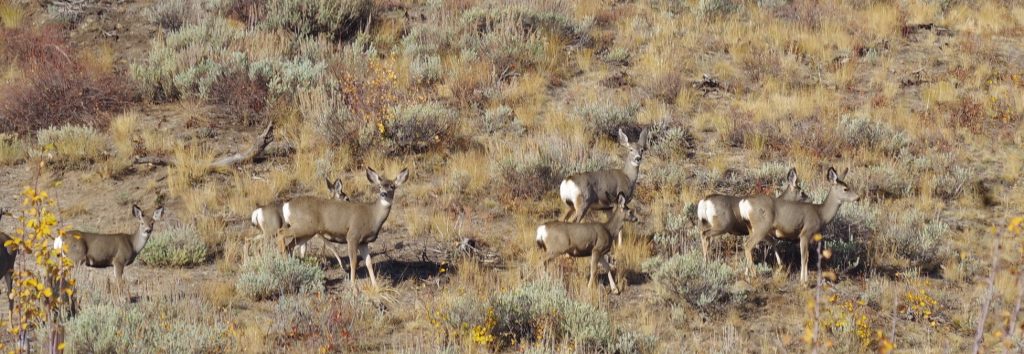
The Lower Bennett Hills are winter range for elk and deer. The animals migrate south from the Soldier Mountains, the South Fork Boise River area, and the west side of the Wood River Valley. Some live in the Bennett Mountains year round.
That wildlife migration corridor lies inside the Smoky-Boise Complex Priority Area designated by Idaho Fish and Game. It’s one of five priority areas statewide.
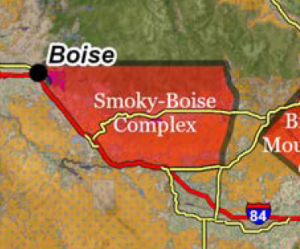
Why is it a Priority Area?
- It contains about 40,000 mule deer, the state’s largest mule deer population, thousands of elk, and a growing antelope population.
- It includes extensive big game winter range and migration habitat linking winter and summer ranges.
The whole migration corridor in the Bennett Hills contains primo wildlife habitat – stringers of aspen trees, hiding cover in timbered areas, and access to water.
Idahoans have a strong interest in wildlife migration corridors
According to the latest “State of the Rockies” Conservation Poll of 400 Idahoans by Colorado College, wildlife migration corridors are an item of keen public interest.
Seventy-five percent think more emphasis should be placed on conserving wildlife migration routes, and 89% support the construction of wildlife-crossings on highways.
 Idaho Fish and Game is working with the Idaho Transportation Department to create an overpass or underpass on U.S. 20 near Hill City, due to a high number of animals crossing there.
Idaho sportsmen have a strong interest in the fate of mule deer and elk in Bennett Hills because it’s known for producing trophy animals.
For example, about 2,700 hunters applied for 75 any-weapon Buck deer tags in Unit 45 last year; only 3 percent drew a tag.
Preserving open spaces and wildlife habitat in the middle of the migration corridor
To facilitate mule deer and elk migration from the Soldiers to the Bennett Hills in the winter, Idaho Fish and Game has been working to secure conservation easements with landowners in the Hill City area to keep working lands working and open space intact.
Chad Helmick and his family manage a 4,000-acre family cattle ranch in Hill City right in the middle of that migration corridor. This is their summer range.
Two years ago, the Helmick family inked a conservation easement with Idaho Fish and Game to preserve the open space and wildlife habitat on their Hill City ranch.
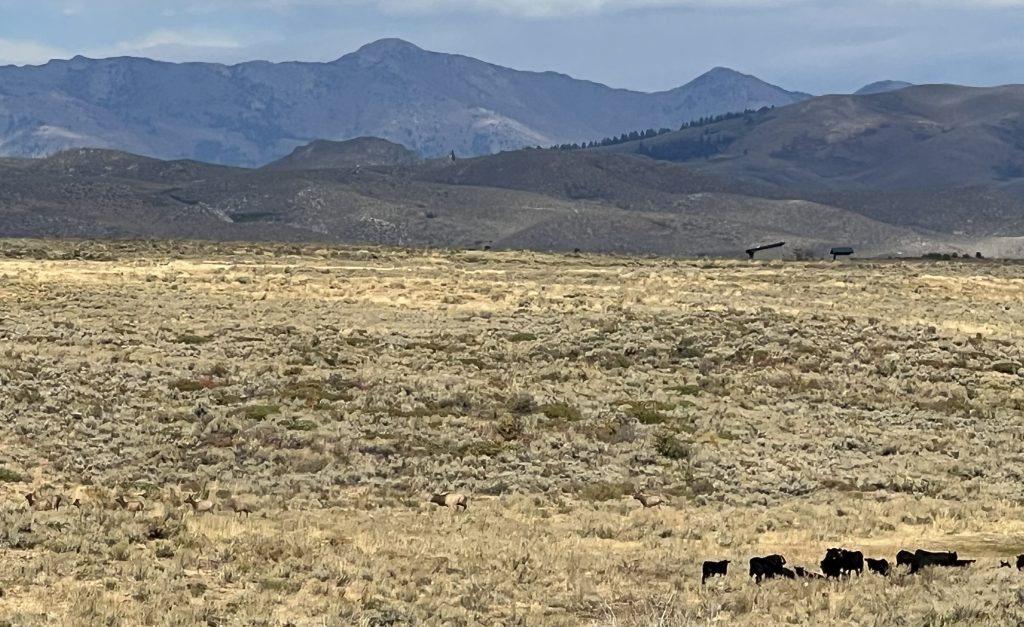
Cattle and elk grazing on open space conservation lands in the Hill City area (courtesy Chad Helmick).
“Oh man, this is one of the major migration corridors for mule deer. Right through the middle of this place,” says Chad Helmick.
“The elk live here for most of the summer. There’s sage grouse, lions, and we actually had wolf tracks at the cabin this year, deer and antelope … I’ve never seen a moose here, but I’m sure they’ve been here. I’ve found bear tracks, anything you can name, grouse, chukars, huns, pretty diverse wildlife.”
The Helmick family carefully manages their summer range so it benefits cattle and wildlife.
“This ground is basically a bank account for us, if we treat it good, it’s going to treat us good. And it benefits everything that way.”
 Searching for short- and long-term solutions for elk wintering in Bliss
While Fish and Game seeks to improve safety for wildlife at highway crossings and conserve habitat in the northern part of the migration corridor, solutions are more elusive in the Bennett Hills winter range to the south.
“We don’t have a lot of strategies to deal with 1,000 elk,” McDonald says. “We made an agreement with the landowners that we’ll leave the elk where they were, and we’ll compensate for whatever damages occurred in the spring. That’s where we sit right now.”
Neither McDonald nor the farmers think wolves are pushing the elk into their fields, which has occurred elsewhere.

Elk grazing near Bliss in the winter of 2024-2025, with a mother cow and calf in the foreground (courtesy Katie Dennis).
In recent months, following the wintering elk situation in Bliss, Helmick and neighboring farmers have been meeting with Idaho Fish and Game to discuss long-term solutions.
“Mostly what came out of last winter is that we’ve got a problem, and we need to do something about it,” Helmick said.
Solutions might include a new population survey in 2026-27 to confirm wintering elk numbers in the Bennett Hills.
Reducing elk herds through hunting could be another solution. The Helmicks allow limited big game hunting on their Hill City Ranch and Bliss Ranch to help prune the big game populations.
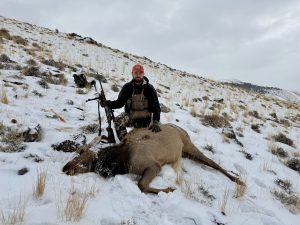 In 2019 and 2020, Idaho Fish and Game issued a large number of cow tags in Unit 45 and thinned out the wintering elk herd by 30 percent.
“We took some pretty drastic action in 2019 to reduce numbers, and it worked,” McDonald says. “We’ve kind of been in a maintenance pattern since then.”
Do the elk have enough to eat on public lands in the Bennett Hills?
“I don’t think this is a habitat issue. Ungulates have a behavioral shift in the winter,” he says. “What’s really important for deer and elk is they mostly feed off of body fat from the summer months is what they live off in the winter. What they’re really looking for are places where they can be go be left alone.”
Are recreationists pushing elk onto private lands in the winter?
North of the Bliss farms, bird hunters chase chukars in January, and antler hunters and ATV riders recreate in the Bennett Hills in February and March. Could these activities be pushing elk onto private lands below?
“That’s the million dollar question right now,” McDonald says. “We do know the Bennett Front is a very popular place to recreate, whether you’re a UTV user, someone who just wants to be outdoors, look at wildlife, whether it’s shed hunters or bird hunters, the Bennett Hills are a popular place because it affords pretty easy access.”
Trespassing is an issue too
Trespassing on the Bliss farms is a problem, too. Last winter, people walked onto private lands on foot in hopes of getting a close-up photo of the elk.
“Picture-takers, you got people in cars, side by sides, and you got people that walk, and it seems like there’s more and more people who don’t abide by the basic rules of trespassing on private property,” Helmick says.
 He notes that people need to follow the mantra of “ASK FIRST!” before stepping onto private land.
“Had a guy walk through to take pics of 300 elk, and they ran through three fences, and it took me three hours to fix the fences so my cows wouldn’t get out,” Helmick said. “So his 5 minute picture-taking cost me 3 hours. If they’d ask for permission, I could have sent them a different way, so they didn’t cause a problem.”
It’s also important to respect private property that’s posted No Trespassing.
Meanwhile, Helmick and his fellow farmers are hoping that fewer elk return to their Bliss farms this winter. “I hope we don’t see that again.”
Steve Stuebner is the writer and producer of Life on the Range, a public education project sponsored by the Idaho Rangeland Resources Commission.
© 2025